
Tags
Beethoven's Choral Fantasy, Chris Petrie (Conductor), David Lambert, Music Distortion, Philharmonie Horst, Ravel's Bolero, Tom Pauls (Pianist)
This morning at 06:00 (a good time for me), I watched and listened to a YouTube video recording of a performance of Beethoven’s Choral Fantasy, a chamber piece written in 1808 for solo pianist, symphony orchestra and vocalists, and performed here by the Bonn-based Philharmonie Horst orchestra and singers, conducted by Chris Petrie and accompanied by pianist Tom Pauls. I was not familiar with this piece of music, but David Lambert had recommended this particular performance to me. David suffers from the same musical distortion problem as I do and, in the past, has recommended other pieces of music which still give him pleasure which, he suggests, may do the same for me. You can read about what happened when I followed up on one of his earlier recommendations, Ravel’s Bolero, in the 2019 post: https://ben-bennetts.com/2019/09/10/an-emotional-moment/
The Choral Fantasy is 22 minutes long and opens with a 4-minute virtuoso solo piano introduction before blending in with the orchestral backing. Despite its title, the vocal part of the piece does not occur until roughly five minutes before the end, but when it does, it’s jubilant, exuberant and… well, you’ll read about what happened shortly.
This performance is staged in an elegant drawing room in the Beethoven-Haus in Bonn and with a small standing audience gathered behind the conductor. The camera work and audio recording stations are exceptionally well done, alternating between grandstand and close-up views of the players and audience. I played the video on my laptop and listened to the sound through my Sennheiser earbuds.
At the end of the performance, here’s what I sent immediately to David:
David… I found the YouTube video and played it. Three things happened: first, although I’m not familiar with this particular piece, I loved it; second, the tears welled and, finally, could no longer be suppressed once the singers entered towards the end; and, third, I have come to a significant realisation about how I can learn to enjoy music again.
Let me elaborate. My musical distortion problem is well documented and means that I no longer entertain listening to music but, similar to the earlier Ravel’s Bolero experience, the enthusiasm of the Choral Fantasy performers entranced me – the flourishes and graceful head and arm gestures of the pianist as his fingers rippled up and down the Steinway & Sons keyboard; the face and particularly the eyes of the young lady on the oboe and her lovely smile at the end; the serious yet attractive timpanist – and in the audience, particularly the blond-haired 2-ish-year-old boy in his father’s arms (take a look at the second photo below); and the concentration and obvious enjoyment of the other spectators clustered behind the conductor – and, finally, in the singers, one with a wine glass in his hand, who were embedded in the audience like a flash mob and suddenly started singing.
The tears did flow. As with the Bolero performance, I was overwhelmed by what I had just heard and seen and, even though it was only 22 minutes long, momentarily exhausted by the experience. Afterwards, I wondered why. Why had I reacted so when I knew that what I had heard was probably not what Beethoven intended? Then it hit me in what, now, is blindingly obvious. It was the addition of the visual cues to the aural cues. Let me explain.
Throughout the years when I listened avidly to music of all genres, I usually did so either in my study on a Bose Music System, or in an aircraft or hotel room, or wherever I could grab some downtime while travelling the world. In all cases, I listened in solitude. My musical tastes were not the same as those of my wife or children and, in the study at least, I could shut the door and listen through the Bose speakers. Otherwise, it was through noise-cancelling headphones. The point is, in almost all cases, all I did was listen. There was no visual aspect to my listening experience. I rarely attended live concerts. I have yet to go to a music festival. My whole life of musical enjoyment has been based solely on the aural experience.
What I now realise through both the Bolero and the Choral Fantasy experience is that if I add in visual cues, I can recreate most of the pleasure I used to receive from just listening to music. Watching the conductor command the volume, pace and teamwork of the orchestra members; tracking the up/down movement of the pianist’s fingers; following the positioning and ferocity of the timpanist’s mallets; noting the swoops of the bow across the violinist’s strings; observing how the oboist dips and lifts the instrument – all this, and more, tell me what is happening as the notes are played and my brain links the visual with the audio and… well, produced the emotional tears this morning.
This is blindingly obvious, you say. Yes, once it’s pointed out, but, in my case, all my musical appreciation skills were honed on aural only. I did not need visual cues. In the study, I would place a CD in the holder, close the door, turn down the lighting, shut my eyes, and lose myself in the music. In those days, anything visual was a distraction. I have realised today that introducing a visual accompaniment puts back much of what I’ve lost and has reopened a path to musical enjoyment.
I have lots to explore. So far, it has worked for two pieces, both performed by youthful orchestras in a live performance in a relatively small music room or concert hall. Will it work for a full-blown, well-established orchestra in a large concert hall? How about a soloist on a classical guitar, mandolin or harpsichord? Will large choral works do it for me? Or opera, light or heavy? Or, someone like Keith Jarrett in a live performance, particularly his 1975 Köln Concert? Or other forms of jazz? How about ambient and techno, both of which had their place in my musical adventures? Or singers such as Sheila Chandra, Joan Armatrading, Joan Baez, and Maddie Prior? Or the magic of Dire Straits, Yes, Grateful Dead? Or…?
There’s work to be done. Thank you, David. And thank you, Philharmonie Horst.
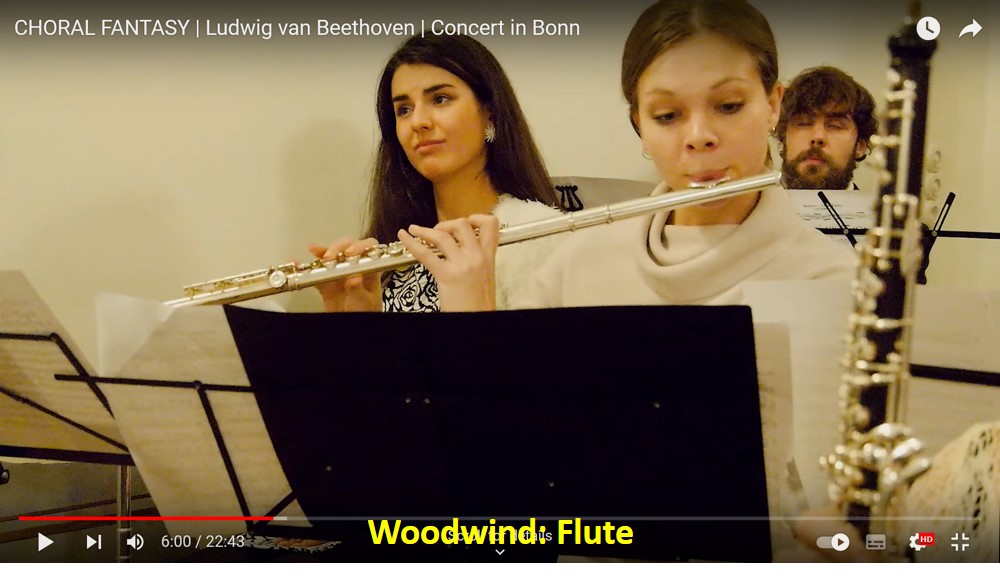
Here are some scenes from the performance.




(^_^)
 Ben's Blogs, Books & Pix
Pingback: Music For Deaf Ears: Guest Posting | Ben's Blogs, Books & Pix